Bedding · Materials & Standards
What Organic Mattress Certifications Actually Verify
An organic label can sound like a promise about an entire mattress. In practice, it may apply only to a particular fiber, ingredient, or stage of production. Understanding that distinction makes it easier to compare claims, ask useful questions, and tell a meaningful certification from a vague green-sounding phrase.
The label is a starting point, not the whole story
“Organic mattress” is a simple phrase for a surprisingly complicated product. A finished mattress can contain a cover, quilting, batting, foam, latex, springs, adhesives, fire barriers, thread, and other components. Those materials may come from different suppliers and follow different production routes. So when a label says “organic,” the first question is not simply whether the claim sounds reassuring. It is: what, exactly, is being described as organic?
The answer might be the cotton in a fabric cover, the wool in a batting layer, the latex in a core, or several identified components. It might refer to the agricultural origin of a raw fiber, the processing and handling of a textile, or a product’s compliance with a particular standard. Those are related ideas, but they are not interchangeable. A mattress can include an organic-certified material without every part of the finished sleep surface being certified organic.
That nuance does not automatically make a claim misleading. It does mean that readers should look beyond a large word on a product page and find the smaller information that gives it meaning: the standard’s name, the certified scope, the certificate or listing, and any exclusions.
For shoppers comparing organic mattresses, this is less about catching a brand out than about making an informed decision. Certification is most useful when it provides a clear, verifiable answer to a specific question.
What certification can—and cannot—tell you
A certification program generally sets requirements, identifies who or what must meet them, and uses a defined process to check compliance. Depending on the program, that process may involve reviewing records, inspecting facilities, testing materials, tracing supply chains, or confirming that specific production practices have been followed. The details vary, so the standard’s own scope matters.
Certification can help make a claim more accountable than an unsupported phrase such as “made with natural materials.” It can also give consumers a shared framework for comparing products. But a certification is not a universal quality seal. It does not necessarily evaluate mattress comfort, pressure relief, durability, cooling, spinal alignment, or whether a particular bed will suit an individual sleeper.
Nor does one certificate answer every health or environmental question. A standard may focus on how agricultural fibers were produced; another may address certain chemical restrictions in textiles or foam; another may assess emissions from a finished product. The programs can complement one another, but they do not all measure the same thing.
That distinction is especially important because mattress labels often bring together several kinds of language: “organic,” “natural,” “non-toxic,” “low emissions,” “chemical-free,” and “eco-friendly.” Each phrase can imply something different, and some are not certifications at all. Read them as separate claims rather than treating them as a single guarantee.
Fiber certification versus a certified finished product
One of the most useful distinctions is whether a certificate applies to an input material or to a finished item. Imagine a mattress with an organic cotton cover and a conventional foam core. The cotton claim may be specific and legitimate, but it would not, by itself, establish that the foam, stitching, adhesives, or entire mattress is organic-certified.
Now imagine a mattress made with several certified materials. That still does not automatically mean the finished mattress has been assessed as a whole under a product-level standard. A finished-product certification may have requirements covering multiple components and processes; a raw-material certificate may have a narrower reach. Both can be valuable, but they answer different questions.
Look for wording that names the component. “Cover made with certified organic cotton” is more precise than a broad headline that leaves the scope unclear. If a company says its mattress is certified, ask whether the certificate covers the complete mattress, a particular material, or a specific manufacturing step. If the answer points to a certificate, check that the document identifies the relevant product or supply-chain scope rather than assuming that a logo covers everything sold by the brand.
Component-level detail can also help explain why two products with similar labels are not necessarily comparable. One may identify the certification of a fabric alone; another may document a wider group of materials. The meaningful comparison is not the size of the logo, but the standard, scope, and evidence behind it.
A few standards shoppers may encounter
Several names appear frequently in conversations about organic mattress materials. Their requirements and coverage are distinct, and standards can change, so consult the current program documentation rather than relying on a logo or a retailer’s shorthand.
GOTS and organic textiles
The Global Organic Textile Standard, commonly known as GOTS, is associated with organic fibers and textile processing. Its scope includes requirements beyond the agricultural origin of the fiber, with criteria across relevant stages of textile production. When a brand cites GOTS, check whether the claim refers to a certified textile, a component, or a finished product, and confirm what the particular certificate covers. A GOTS claim for a cotton cover should not be read as proof that every other mattress component is organic.
GOLS and latex
The Global Organic Latex Standard, or GOLS, is associated with organic latex and requirements relating to its supply chain and processing. A mattress maker may refer to GOLS-certified latex while using other materials that fall outside that certification. The useful follow-up is to identify which latex component is covered and whether the finished mattress carries any separate certification.
OEKO-TEX and tested textiles
OEKO-TEX labels are often relevant to textiles and chemical testing, but they should not be treated as a synonym for organic. A textile may be tested against specified limits for certain substances without the fiber itself being certified organic. The particular OEKO-TEX label and its scope matter; check the program’s current explanation and verify the product or component where possible.
CertiPUR-US and foam
CertiPUR-US is associated with flexible polyurethane foam and specified content, emissions, and durability criteria. It is not an organic certification. If a mattress includes foam bearing this certification, that can tell a shopper something about the certified foam under the program’s requirements, but not that the mattress is made from organic materials or that every component has been evaluated in the same way.
Other claims and standards
Some products may also mention emissions programs, fire-safety requirements, responsible sourcing, or regional organic rules. These may address useful but different questions. The clearest product information names the standard, says which material or product it applies to, and avoids implying that a certification covers issues it was not designed to assess.
How to assess a brand’s claim, including Naturepedic
Naturepedic can serve as a practical context for the questions to ask when evaluating a mattress brand’s material and certification claims. The goal is not to assume that one company’s labels mean the same thing across every product, or to treat a brand name as evidence on its own. Product constructions and certification scopes can vary. Instead, use the information for the specific model you are considering.
Start with the product page, then look for a standards or certifications page, downloadable documentation, or an explanation of the materials in each layer. If the language says “organic cotton,” find out whether that refers to the cover, batting, or another named component. If the page says “certified,” identify the certifying organization and the standard. If a certificate is available, check whether its scope identifies the relevant supplier, material, product, or facility.
When details are not clear, a concise question to customer service can be more revealing than another round of searching: Which components of this exact mattress are covered by each certification, and can you share the relevant certificate or verification information? A useful reply should distinguish among materials instead of answering with a general statement about the whole brand.
This approach works for any manufacturer. A recognizable name may make research easier, but it does not replace model-specific documentation. A brand can offer several constructions, and a certification that applies to one fabric or component should not be assumed to apply to another product in the collection.
A practical checklist before you buy
When a mattress is described as organic, take a minute to translate the claim into a few concrete checks. You do not need to become a materials scientist; you do need enough detail to understand what the claim covers.
- Name the material. Is the claim about cotton, wool, latex, or another specific component?
- Name the standard. Is the certification identified, with a clear explanation of what it evaluates?
- Confirm the scope. Does it cover a raw material, a textile, a component, a manufacturing facility, or the finished mattress?
- Look for documentation. Can the brand provide a current certificate, verification, or directory listing that supports the relevant claim?
- Notice the exclusions. Are any layers, adhesives, fire barriers, or other parts outside the stated certification?
- Separate certification from performance. Organic status does not tell you whether the mattress feels comfortable, supports your preferred sleeping position, or will last for a particular number of years.
- Check the exact model. Do not assume that a claim for one product applies to every mattress or accessory sold under the same brand.
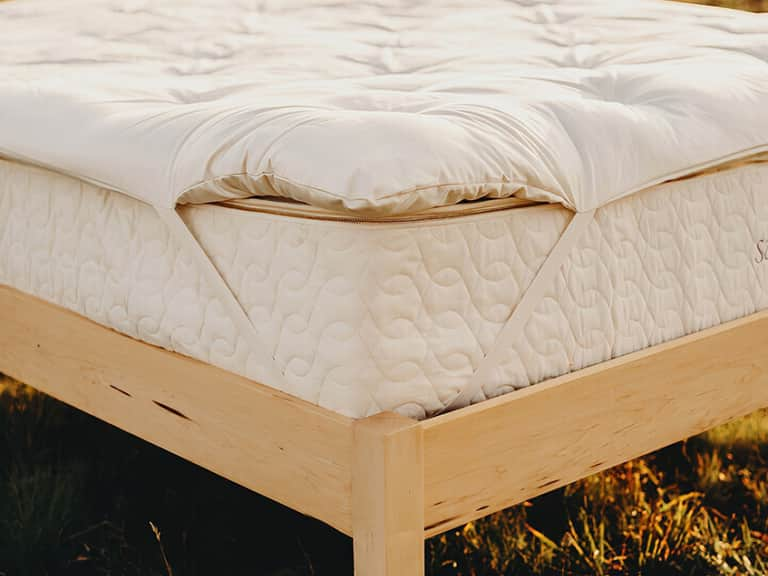
This checklist is also useful for mattress pads and toppers. A product may contain an organic textile cover while its fill has a different origin or certification status. For example, the product information for the Savvy Rest Natural Savvy Woolsy Mattress Topper describes a certified organic cotton casing and a wool fill. That description identifies materials in the topper; it should not be mistaken for evidence that a separate mattress beneath it is certified.
What certification does not decide about your sleep
A well-documented organic claim can help you understand sourcing and material standards. It cannot determine whether a mattress is right for your body, bedroom, or routine. Those decisions involve other practical considerations: firmness, support, pressure relief, temperature, motion transfer, construction, and how the bed fits your foundation and sheets.
Care deserves a place in the conversation, too. A natural or organic material may have specific cleaning instructions, and the maintenance needs can differ from those of synthetic fabrics or foam. Check the manufacturer’s care guidance before washing a cover or using a protector. A mattress’s certification status does not mean that every layer is washable, stain-proof, or resistant to moisture.
It is also wise to be cautious about broad health promises. A certification may establish compliance with defined criteria, but that does not automatically prove that a mattress will prevent allergies, improve sleep disorders, or produce a particular health outcome. People with specific health concerns should seek appropriate professional guidance rather than relying on marketing language to make a medical decision.
Think of a certificate as one useful piece of information in a larger evaluation. Construction, comfort, durability, warranty terms, trial policies, and clear care instructions all matter. The best choice is the one whose documented attributes and actual feel make sense for your needs—not simply the one with the most reassuring collection of badges.
Why precise language builds trust
Organic certification can be genuinely helpful, but only when the language around it is specific. “This cotton cover is certified under a named textile standard” gives a reader something concrete to verify. “An organic sleep experience” may sound appealing while leaving the material, scope, and evidence unanswered.
For consumers, the difference is empowering. It turns a potentially confusing label into a conversation about the actual contents of a mattress. It also makes fair comparisons possible: one product’s certified cotton cover can be assessed alongside another’s certified latex core without pretending they are the same claim.
For brands, transparency means explaining what a certificate covers and what it does not. That is not a weakness. No single standard can answer every question about sourcing, chemicals, emissions, craftsmanship, comfort, and longevity. A clear explanation lets a shopper understand where a certification is meaningful and where additional information is needed.
The bottom line: follow the scope
When you see “organic mattress,” pause before assuming that the phrase applies to every layer. Look for the material being described, the standard behind the claim, and the documentation that identifies its scope. An organic certificate may verify the origin or handling of a particular fiber; a textile standard may cover processing requirements; a foam certification may address a different set of criteria. Each can provide useful information, but none should be stretched beyond its stated purpose.
With Naturepedic or any other mattress brand, take the same model-by-model approach: map the materials, check each certification, and ask for clarification where the wording is broad. Then weigh those findings alongside comfort, support, care, and durability. That simple habit turns a label from a promise to decode into evidence you can actually use.